TQM core values: how to define and embed the cultural
foundation
TQM core values are the foundational beliefs that define how an organization approaches quality — they are the base layer beneath the methodologies and tools that make up the TQM system. Effective TQM core values have three characteristics: they are quality-specific (not generic organizational values like integrity), they are behavioral (they describe how people act, not what they believe), and they are testable (it is possible to observe whether the organization is living the value or not). Common TQM core values include: customer requirements define quality, every defect has a root cause that can be eliminated, decisions are made on data rather than opinion, improvement is continuous and never complete, and quality is everyone's responsibility.
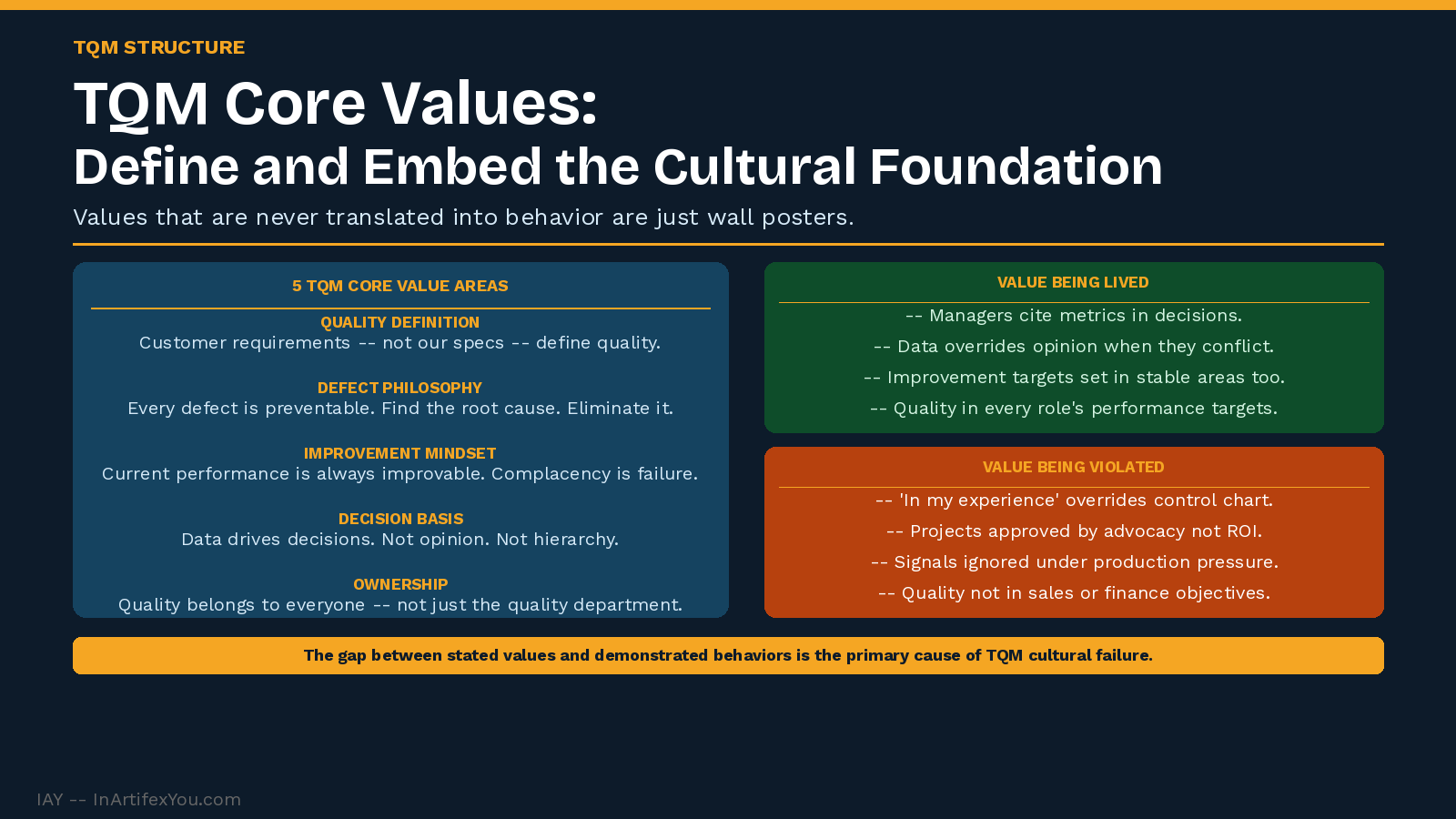
TQM core values fail in most organizations not because they are poorly defined but because they are never translated from statement to behavior. An organization that states 'customer requirements define quality' as one of its TQM core values but then designs products to internal specifications rather than customer-defined requirements is not living the value — it is displaying the statement. The gap between stated values and demonstrated behaviors is the primary cause of TQM cultural failure.
Step 1: Define Quality-Specific Values
TQM core values should address the specific beliefs that determine how an organization approaches quality — not generic organizational values that apply to every function equally.
|
Value Area |
Example Core Value Statement |
Behavioral Test |
|
Quality definition. |
Customer requirements — not our specifications — define what quality means. |
Are product specifications derived from VoC research or internal engineering preference? |
|
Defect philosophy. |
Every defect is preventable — it has a root cause that can be found and eliminated. |
When a defect occurs, is the response investigation and prevention or containment and acceptance?. |
|
Improvement mindset. |
Current performance is always improvable — complacency with good results is a quality failure. |
Does the organization set improvement targets in areas that are currently performing well? |
|
Decision basis. |
Quality decisions are made on data, not opinion or hierarchy. |
When data and management opinion conflict, which drives the decision? |
|
Ownership. |
Quality is the responsibility of every person — not just the quality department. |
Are quality objectives included in every role's performance targets? |
Step 2: Translate Values into Observable Behaviors
|
VALUE: DECISIONS BASED ON DATA Managers cite specific metrics when making process decisions. |
VALUE BEING VIOLATED Managers override data with 'in my experience' arguments. |
Step 3: Embed Values in Systems and Practices
- Performance management: include behavioral indicators for each core value in every role's performance objectives.
- Hiring: include value alignment assessment in every hiring process — behavioral interview questions that reveal whether candidates demonstrate the quality values.
- Leadership modeling: leaders demonstrating the values in every decision — especially when costly or inconvenient — is the most powerful embedding mechanism.
- Value audits: quarterly reviews that assess organizational behavior against each core value using observable evidence, not self-assessment surveys.
Back to hub: TQM Structure.
| ||||||||||||||||||||||
The Continuous Improvement Certification at InArtifexYou gives you a complete, practical system to map, baseline, improve, and sustain any process — and the verified credential to prove you can lead it.
inartifexyou.com/continuous-improvement-certification-online.html | ||||||||||||||||||||||
|